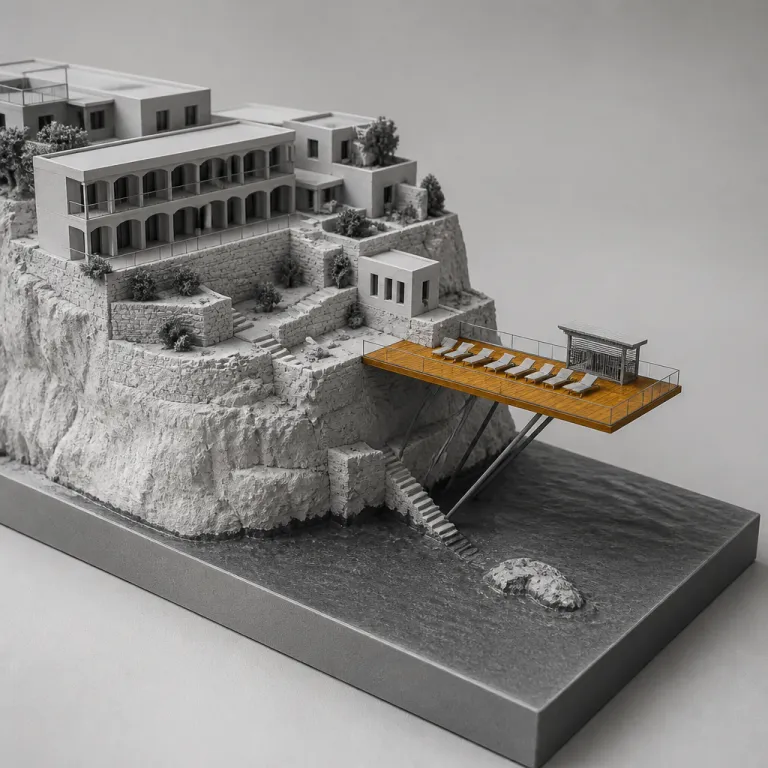
How Amalfi Coast hotels engineered their own beaches
Why the Amalfi Coast had to invent its own beaches
The Amalfi Coast looks like a shoreline drawn vertically, not horizontally. Sheer rock drops straight into the sea, which means that a natural beach is the exception, not the rule, and any Amalfi Coast hotel beach club worth your time has been carved, poured, or engineered into the cliff. For travelers choosing between hotels in Amalfi, Positano, or Praiano, the real question is no longer only which hotel has the best views, but which one solved the beach access problem in a way that suits how you actually like to swim.
In Positano, the famous Spiaggia Grande is a social stage rather than the best beach for quiet swimming. Most luxury hotels sit high above this spiaggia, so the modern cliffside beach club concept emerged as a way to turn bare rock into a private bathing area, with platforms, ladders, and saltwater pools suspended over the sea. Along this stretch of the Italian coast, a hotel that claims to have a true private beach usually means a concrete or wooden terrace anchored into stone, with orderly rows of sunbeds and umbrellas, a bar, and often a discreet lift shaft hidden behind lemon trees.
Il San Pietro di Positano, Hotel Santa Caterina near Amalfi, and Le Sirenuse in Positano are the reference points. Each hotel built its own private sea platform or beach club, using elevator tunnels, funiculars, and boat service to overcome the cliffs and create direct access to the water. As one local explanation puts it without romance but with precision: “They use elevators, funiculars, and private beach clubs.”
The anatomy of a designer hotel beach club
Walk through any serious Amalfi Coast hotel beach club and you are really walking through a piece of engineering. A cliffside elevator or funicular drops you from the main hotel to sea level, where a series of terraces step down to the water and frame the views back to the Amalfi Coast villages. On the lowest platform you will find the heart of the beach club: a bar, a restaurant, and a line of sunbed-and-umbrella pairs facing the open sea, often with freshwater showers, changing cabins, and a lifeguard station built into the rock.
At Il San Pietro di Positano, the private beach area is a polished amphitheater of stone and teak, with a small spiaggia carved from rock and a saltwater pool cut into the cliff; the hotel’s panoramic elevator, described in its own materials as descending more than 80 meters through the mountain, delivers guests directly to this private sea platform. Hotel Santa Caterina’s beach club in Amalfi feels more old world, with white ironwork, a pool over the sea, and a ladder that drops straight into deep blue water rather than onto sand; the hotel notes that guests reach the lido via two glass elevators and a short path, avoiding the hundreds of public steps that connect Amalfi town to its main spiaggia. Le Sirenuse Mare, the beach club created by Le Sirenuse, leans into the dolce vita fantasy with striped loungers, a curated wine list, and boat service that shuttles guests between Positano, Arienzo Beach, and quieter coves, according to the hotel’s own descriptions of its off-site seaside annex.
These clubs in Amalfi and beyond are not public beaches; they are controlled environments where access, comfort, and privacy are carefully managed. Expect staff to handle everything from setting your sunbeds and umbrella to arranging a private boat for lunch at Conca del Sogno or another coastal restaurant. During peak summer and Ferragosto, when every meter of spiaggia along this part of Italy fills, the difference between a hotel guest with a reserved lounger and a day visitor paying walk-in fees becomes stark, which is why understanding how Ferragosto reshapes Amalfi Coast hotel life matters before you book.
Hotel platforms versus standalone beach clubs
Not every stretch of the Amalfi Coast is controlled by a hotel, and not every beach club belongs to a single property. Standalone beach clubs, from Arienzo Beach Club in Positano to Conca del Sogno near Nerano, operate as independent venues that sell day access, boat service, and restaurant tables to anyone who can secure a reservation. A hotel beach platform, by contrast, is usually reserved first for in-house guests, with any remaining sunbed-and-umbrella spaces sometimes released to outsiders at high fees.
For a solo traveler, the choice between a hotel-based Amalfi Coast hotel beach club and an independent club on a nearby spiaggia is about rhythm as much as budget. Stay at a place like Il San Pietro or Hotel Santa Caterina and your private beach access is woven into the day: breakfast on the terrace, elevator to the sea, a swim, then back up to change for dinner. Base yourself in a town hotel without direct sea access and you will find that your best beach options involve booking into beach clubs by the day, timing boat transfers, and watching taxes, fees, and service charges add up.
There is also a social difference. Hotel platforms tend to feel like extensions of the property’s living room, with a quieter crowd and staff who know your room number before you sit down with a bottle of Falanghina. Independent beach clubs along this coast, especially around Spiaggia Grande and the coves near Praiano and Conca dei Marini, can be livelier, with music, weddings, and events that turn the spiaggia into a stage, which is why they often double as sought-after Amalfi Coast wedding venues.
How beach access now shapes your booking decision
When you look at luxury hotels in Amalfi or in Positano, the room photos rarely tell you how hard it is to reach the water. On this coastline, the difference between a lift straight to a private beach platform and a 400-step descent to a public spiaggia can define your stay more than the thread count on the sheets. That is why the Amalfi Coast hotel beach club has become a core part of the booking conversation, not an afterthought.
Before you check availability, ask the hotel to describe exactly how you reach the sea and how their beach club or sea platform works. Do they have a true private beach area, or do they simply reserve a section of a public spiaggia like Spiaggia Grande or a smaller cove near Praiano? Clarify whether sunbed-and-umbrella sets are included in the room rate or charged as extra fees, and whether there are additional taxes and service charges on top of the published daily rate.
Serious swimmers should ask about depth, ladders, and shade, because some platforms sit in deep water while others front a shallow spiaggia. If you plan to explore by boat, confirm whether the hotel’s beach club offers direct boat service for transfers to clubs in Amalfi, Arienzo Beach, Conca del Sogno, or Conca dei Marini, or whether you must walk back to the main harbor. Travelers who want a broader coastal base sometimes pair a cliffside stay with a few nights in Sorrento at a refined property such as the Relais Regina Giovanna, which offers its own shoreline access and a calmer pace, as detailed in this elegant Sorrento hotel review.
The economics and future of platforms on rented rock
Behind every serene Amalfi Coast hotel beach club lies a spreadsheet of engineering costs, rock leases, and maintenance schedules. Carving an elevator shaft through stone, pouring concrete platforms into the sea, and maintaining boat service all year requires capital that only a handful of luxury hotels on the Amalfi Coast can justify. Publicly available rate calendars from leading properties such as Il San Pietro and Hotel Santa Caterina show that standard double rooms in peak season often price in the high three-figure or low four-figure range per night, reflecting the cost of building and operating these cliffside beach clubs.
Operating a beach club on rented or concessioned rock also means navigating regulations, environmental rules, and local politics. Italian coastal areas are typically managed under state maritime domain rules, with municipalities granting time-limited concessions to hotels and stabilimenti balneari; hotels pay for the right to occupy a slice of the shoreline, then recoup those costs through room rates, day guest fees, and premium pricing on everything from a bottle of wine to a plate of spaghetti alle vongole. As demand for private beach experiences grows, some properties are opening their platforms to non-residents during off-peak hours, turning the beach clubs into revenue-generating leisure hubs with yoga classes, DJ sets, and tasting menus.
The next evolution is likely to be more programming rather than more concrete. Expect hotels in Amalfi and in Positano or Praiano to refine how their beach clubs connect guests to the wider sea: curated boat excursions, partnerships with independent clubs in Amalfi, and quieter corners for those who want the dolce vita without the crowd. For the solo explorer, that means the Amalfi Coast hotel beach club will remain both a status symbol and a practical tool, the place where you slip into the water, watch the light move across the cliffs, and understand why this part of Italy keeps rewriting the rules of seaside leisure.
FAQ
Which Amalfi Coast hotels have private beach access ?
Only a few hotels on the Amalfi Coast offer true private beach or sea platform access, including Il San Pietro di Positano, Hotel Santa Caterina near Amalfi, and Le Sirenuse with its Le Sirenuse Mare beach club. These hotels in Amalfi and Positano have invested in elevators, terraces, and platforms that connect rooms directly to the sea. When you check availability, always confirm whether access is exclusive to guests or shared with day visitors paying fees.
How do cliffside hotels provide access to the sea ?
Cliffside hotels use a mix of elevator tunnels, funiculars, and staircases carved into rock to reach their beach clubs. At the bottom, guests step onto platforms equipped with sunbed-and-umbrella sets, ladders into the water, and sometimes a small spiaggia or saltwater pool. Many of these platforms also host boat service, allowing direct transfers to nearby beaches, clubs in Amalfi, Arienzo Beach, or restaurants such as Conca del Sogno.
Is private beach access common on the Amalfi Coast ?
Private beach access is rare along this stretch of Italy because the terrain is mostly vertical cliffs rather than wide beaches. Only a handful of luxury hotels have the space, concessions, and capital to build and maintain their own beach clubs or platforms. Most visitors use public beaches like Spiaggia Grande in Positano or pay day rates at independent beach clubs scattered between Amalfi, Praiano, and Conca dei Marini.
What should I ask a hotel about its beach club before booking ?
Ask how you physically reach the sea, whether by lift, funicular, or stairs, and how many minutes the journey takes. Clarify if the hotel operates its own Amalfi Coast hotel beach club or simply reserves a section of a public spiaggia, and whether sunbed-and-umbrella sets are included or charged as extra fees with additional taxes and service charges. If you plan to explore by boat, confirm whether there is on-site boat service from the platform or if you must use the main harbor.
When is the best time to enjoy Amalfi Coast beach clubs ?
Late spring and early autumn usually offer the best balance of warm sea temperatures, open beach clubs, and manageable crowds. High summer, especially around Ferragosto, brings intense demand for every private beach platform and public spiaggia, so you will find higher fees and tighter availability. If your priority is a calm Amalfi Coast hotel beach club experience, consider shoulder-season dates and always reserve sunbed-and-umbrella spaces in advance when possible.