Walking from the piazza to the valley of mills
Step away from Amalfi’s cathedral steps and the gelato queues, then follow the narrow lane that slips inland toward the old valley mills. Within minutes the sound of traffic fades, replaced by running water and the low hum of a town that once lived from paper rather than postcards. This short walk reshapes any luxury Amalfi Coast travel plan, because it reveals how a medieval paper factory ecosystem still frames the town’s character today.
The path climbs gently through the Valle dei Mulini, the historic "valley of mills" that powered Amalfi’s rise as a maritime republic trading hub. Here the remains of each stone paper mill sit beside the stream, where diverted water once drove wooden hammers that beat linen rags into pulp for paper production. You walk past arches, moss-covered walls and rusted wheels, and the history feels less like a museum display and more like an open-air archive of industrial ingenuity.
Most visitors never push beyond the first souvenir shop, yet this half-day visit offers one of the coast’s most atmospheric cultural excursions. The route toward the paper museum is short in distance, roughly 1.5 km from the seafront, but dense in stories about Amalfi paper once exported across Europe. Pause often for a photo of the terraced gardens and the surviving paper mills, because each sheet of paper you will later handle at the museum began as water, rags and patient labour in this shaded valley.
Inside the Amalfi paper mills museum: from water and pulp to handmade sheets
The heart of this valley is the Museo della Carta, the Amalfi paper mills museum housed in a medieval paper mill whose origins are generally dated to the 13th century. The interior still smells faintly of damp stone and cotton pulp. Here, a guided tour leads you through the full cycle of traditional paper production, from soaking rags to pressing and drying the handmade sheets that once carried royal decrees. One wall explains in clear terms that "What is Amalfi paper? A high-quality handmade paper produced in Amalfi since the 13th century."
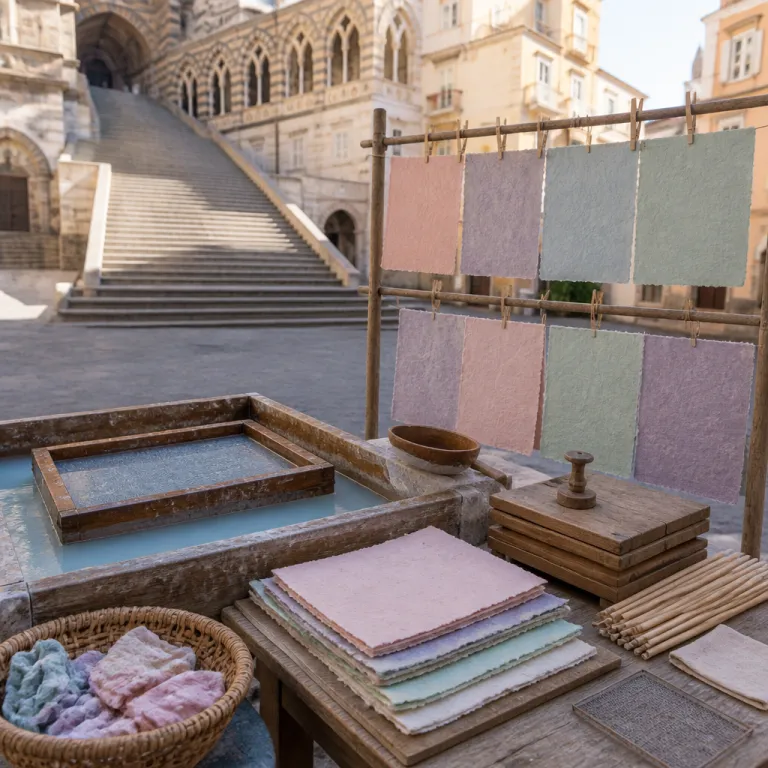
In the first room, guides demonstrate how water from the stream powered hydraulic mills that crushed fabric into a smooth pulp, the base for every type of paper produced here. You watch as a frame is dipped into the vat, lifted with a trembling layer of future writing paper, then pressed and hung to dry as luminous sheets that feel almost textile under your fingers. This is where "Why is Amalfi paper significant? It represents a centuries-old tradition of craftsmanship and cultural heritage." stops being a sentence and becomes a tactile experience.
The museum also answers a practical question many travelers bring into the valley: "Can visitors tour Amalfi's paper mills? Yes, the Paper Museum offers tours showcasing traditional paper-making." Exhibits trace how up to 16 mills once operated here, and how floods in the 18th and 20th centuries reduced them to a handful of paper mills before only one paper factory remained active. For current opening hours, ticket prices and contact details, check the official Museo della Carta website or the Amalfi tourist office, which both update visitor information regularly. Pair this visit with an inland wine tasting in Tramonti, using a cultural itinerary such as the Amalfi Coast wine country guide, and you will see how water, terraces and craft still define the region’s quieter side.
From maritime republic power to luxury stationery on the Amalfi Coast
Long before Amalfi became shorthand for sea-view suites and infinity pools, it was a maritime republic whose influence rested partly on its ability to produce paper at scale. The same valley mills you walk past today once supplied chancelleries and courts, turning Amalfi paper into a diplomatic tool that traveled further than any fishing boat. That legacy still shapes how the town thinks about quality, trade and the stories it sends out into the world.
Cartiera Amatruda, often referred to simply as Amatruda, is widely described as the last operational paper mill in the valley and a living bridge between that history and contemporary luxury travel. Its handmade paper production still relies on water, pulp and wooden presses, but the output now includes wedding invitations, hotel stationery and limited edition art prints that quietly circulate through high-end properties along the Amalfi Coast. When you hold a thick piece of handmade paper from Cartiera Amatruda, you feel the same fibres that once carried treaties during the height of the maritime republic.
Today many premium hotels commission Amalfi paper for menus, welcome notes and event programs, turning each sheet into a subtle signal of place. Some properties pair concert tickets for Ravello’s cultural season with envelopes made from local museum paper, a thoughtful touch that aligns well with curated experiences such as the Ravello summer festival guide. For travelers who value narrative as much as thread count, understanding this paper production story adds a deeper layer to every handwritten note left on a pillow.
How luxury hotels weave Amalfi paper into the guest experience
High-end hotels along the coast increasingly treat Amalfi paper not as a souvenir, but as a design material that carries centuries of local history. At properties like NH Collection Grand Hotel Convento di Amalfi, a former monastery perched above the harbour, you may find room directories printed on thick museum paper that feels closer to parchment than office stock. The tactile weight of this fine paper quietly reinforces the sense that you are staying inside a story rather than just a building.
Some concierge teams arrange a private guided tour of the paper museum followed by a workshop at Cartiera Amatruda, where guests can produce paper themselves and leave with personalised sheets for future correspondence. Others collaborate with the remaining paper factory to create limited runs of stationery, pairing each set with a photo booklet that explains the water-powered mills, the rag-based pulp and the drying racks that define traditional paper production. These experiences sit comfortably alongside wine tastings and boat charters, yet they often linger longer in memory because they engage both hands and mind.
When choosing where to stay, look for hotels that reference Amalfi paper or paper mills in their cultural programming, not just in their lobby shop. Properties that think carefully about vertical circulation and heritage, as analysed in this guide to Amalfi’s staircase focused hotels, tend to be the same ones that invest in meaningful local partnerships. Ask whether the hotel uses handmade paper for turndown notes or event menus, because those small details often signal a broader respect for Amalfi’s craft traditions.
Planning your visit: practical tips for solo explorers and culture seekers
For a solo traveler, the walk from Amalfi’s seafront to the paper museum is an easy half-day cultural excursion that fits neatly between a morning swim and an evening aperitivo. Start early to enjoy the cool air in the Valle dei Mulini, when the sound of water over stone makes it easier to imagine the mills at full capacity. Wear comfortable shoes, because while the distance is short, the path includes uneven steps and brief climbs past former paper mills and terraces.
Book your guided tour at the Museo della Carta in advance during peak months, especially if you want time to handle different types of paper and ask detailed questions about paper production. Photography is usually allowed, so bring a camera or phone to capture each paper mill interior, the wooden hammers and the vats of pulp that still operate for demonstrations. After the visit, stop by the shop to compare various sheets, from thick handmade paper for calligraphy to lighter stationery suitable for everyday notes.
When you return to your hotel, spread your Amalfi paper purchases on the desk and think about how they will extend your travel narrative once you are home. A single card from Cartiera Amatruda, written months later, will carry the memory of cool valley air and the rhythm of water-powered mills more vividly than any digital photo. In a region where the coast often steals the spotlight, this quiet valley of paper mills offers a different way to understand Amalfi today, one sheet at a time.
FAQ
What is special about Amalfi paper compared with other handmade paper?
Amalfi paper is a high-quality handmade paper traditionally produced from linen and cotton rags rather than wood pulp, giving it a soft yet durable texture. The sheets are formed individually in water vats, then pressed and dried in the mountain air of the Valle dei Mulini. This slow process creates deckled edges and a tactile feel that many writers, artists and luxury hotels value for important documents.
Can I visit a working paper mill in Amalfi today?
Yes, you can visit the Museo della Carta, which is housed inside a historic paper mill in the Valle dei Mulini above the town center. The museum offers a guided tour that demonstrates traditional paper production, including the use of water-powered wooden hammers to create pulp. While most original mills are no longer active, the techniques shown here accurately reflect how Amalfi paper was and still can be produced.
How long should I plan for a visit to the Amalfi paper mills museum?
A typical visit to the paper museum, including the guided tour and time to browse the shop, usually takes around one to two hours. If you walk from the seafront through the valley mills and stop for photo opportunities, plan for a half-day round trip. This allows enough time to appreciate the history of the mills, the surrounding nature and the role of Amalfi paper in the town’s development.
Is the walk to the Valle dei Mulini suitable for all fitness levels?
The path from Amalfi’s main square to the valley of mills is relatively short, but it includes steps, uneven surfaces and gentle climbs. Most reasonably fit travelers can manage the walk, especially if they take it slowly and wear proper footwear. Those with mobility issues may prefer a taxi part of the way, then a shorter stroll to the paper museum itself.
Where can I buy authentic Amalfi paper on the Amalfi Coast?
Authentic Amalfi paper is available at the Museo della Carta shop and at selected stationers in the town center that work directly with Cartiera Amatruda. Many luxury hotels on the Amalfi Coast also use local handmade paper for their stationery, and some can arrange private purchases or introductions to suppliers. When buying, look for clear labeling that indicates local paper production and examine the texture, deckled edges and watermark typical of genuine Amalfi sheets.