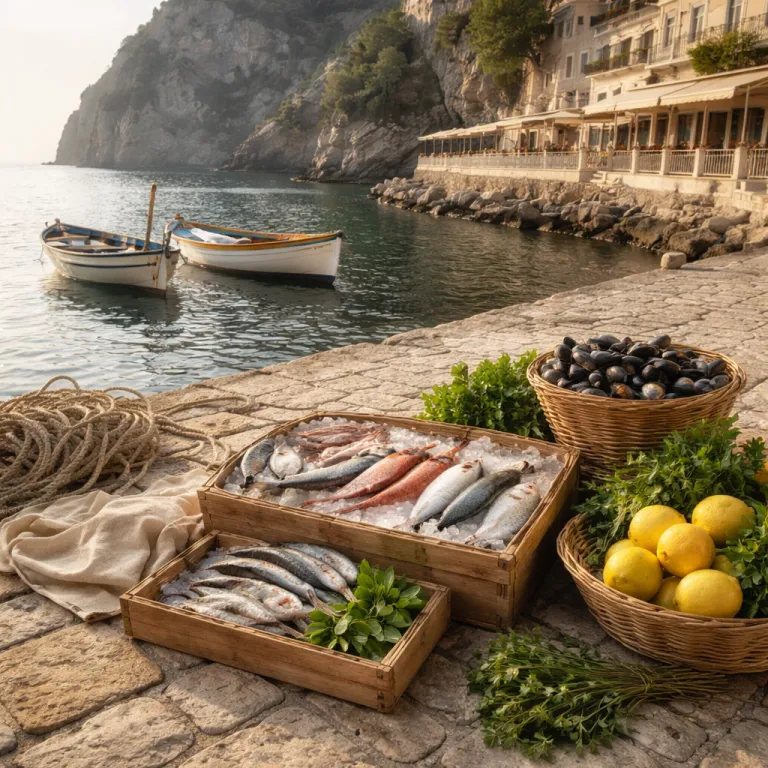
The real supply chain behind local fishermen Amalfi Coast hotels
On this coastline, the phrase “local catch” can be literal. The most authentic local fishermen Amalfi Coast hotels keep direct lines to small fleets in Cetara, Amalfi town and Praiano, shaping what appears on your plate that same evening. When you choose a hotel on the Amalfi Coast that works this way, you are buying into a fragile but remarkable food chain that still runs on trust, tide and phone calls at dawn.
Cetara retains the coast’s most active fishing fleet, sending anchovies, tuna and alalunga along the coast to hotels Amalfi wide. According to figures shared informally by the local co‑operative in early 2023, around two dozen boats still work out of the harbour during peak season, a modest number compared with the past but significant for such a small town. In Amalfi town and the nearby villages of Praiano and Conca dei Marini, smaller artisanal boats supply a handful of luxury hotels that care more about provenance than volume. These are the local fishermen Amalfi Coast hotels that quietly prioritise the sea over spreadsheets, even when the season is busy and demand is high.
At their best, these properties behave less like anonymous resorts and more like coastal palazzi with working relationships to named captains. A good example is Lo Scoglio in Marina del Cantone, a family run hotel and restaurant that has built its reputation on traditional recipes and ingredients from nearby farmers and fishermen. As the family describes it on its own printed menus and materials, “Lo Scoglio is a family-run hotel and restaurant in Marina del Cantone.” Co‑owner Tommaso De Simone has summed up their approach in interviews with Italian food magazines as “cucinare quello che il mare ci dà” – cooking what the sea gives them each day.
For guests, this means the menu follows the sea rather than a fixed hotel template. You might arrive hoping for grilled swordfish, then find alici marinate, alalunga crudo or pasta dressed with Cetara colatura because that is what the boats brought in. The best hotels on the Amalfi Coast explain this clearly, turning a simple dinner into a short lesson in marine seasons and why patience tastes better than any printed menu. In high summer, for example, local co‑operative notes suggest that anchovy landings can be roughly double those of early spring, so the whole menu tilts naturally towards alici.
Not every property lives up to the promise, of course. Some hotels in larger towns such as Sorrento or Positano lean on wholesale markets while still talking about fishermen in the present tense. A chef in Amalfi recently summed up the difference during a regional hospitality workshop: “If I can’t tell you which boat landed your fish, I don’t put ‘pescato del giorno’ on the menu.” The local fishermen Amalfi Coast hotels that matter are the ones where the kitchen team can tell you which boat landed your fish and at what time the call came in from the harbour, sometimes even showing a delivery note or invoice from that morning’s catch.
Where luxury really meets the fishing boats
Among luxury hotels, a small group has turned this supply chain into a quiet art form. Il San Pietro di Positano, with its Zass restaurant, is Michelin starred partly for its commitment to local growers and producers, including fishermen who land their catch below the cliffs. In interviews with Italian food guides, the hotel has estimated that in peak months more than 70% of its seafood comes from within a short boat ride of Positano. When you read about local fishermen Amalfi Coast hotels, this is the level of detail you should expect, not just a romantic line on a menu.
Le Sirenuse in Positano, Hotel Santa Caterina near Amalfi and Casa Angelina in Praiano all maintain close relationships with small boats working the surrounding sea. At these properties, the chef or food and beverage équipe often knows the captains by name and adjusts the menu according to the morning’s calls. One Positano chef describes the daily ritual as “waiting for the first message from the harbour before we finalise the specials board.” This is why the same fish of the day can taste different from one stay to another, and why regular guests quietly ask about specific fishermen rather than specific dishes.
In Ravello, clifftop icons such as Palazzo Avino and Monastero Santa Rosa cannot host their own fleets, yet they still rely on trusted suppliers from Amalfi town and nearby coastal villages. The palazzo kitchens sit high above the sea, but their menus are anchored in the same small harbours as the more obviously maritime hotels Amalfi side. When you compare five star hotels in Positano, Ravello and Praiano, this sourcing detail matters as much as the size of the swimming pool or the view from your rooms, especially if you care about genuine sea to table dining rather than a generic luxury experience.
For a deeper look at how service levels and sourcing differ between properties, it is worth reading an honest guide to what five stars actually gets you in Positano, Ravello and Praiano on stay-in-amalfi-coast.com. That kind of analysis helps you separate marketing from genuine commitment to the sea. It also shows why some of the best hotels quietly under promise on menus, then over deliver when the right catch arrives, serving a simple grilled pezzogna or pezzogna al sale instead of a long list of imported options.
Even in Sorrento, where the town is larger and the port busier, a few hotels still work closely with individual boats. Ask directly at check in whether the restaurant buys from named fishermen or from general suppliers, and listen carefully to how specific the answer is. The local fishermen Amalfi Coast hotels that truly care will happily talk about harbours, seasons and the exact stretch of coast where your dinner was caught, sometimes even pointing out the fishing grounds from the terrace.
What ends up on your plate when the boats set the menu
When a hotel kitchen follows the sea, your dinner becomes a snapshot of that day’s conditions. In local fishermen Amalfi Coast hotels, the most memorable dishes are often the simplest plates of alici, grilled or marinated, served with lemons and olive oil. The luxury lies not in elaborate technique but in the fact that those anchovies probably left Cetara’s harbour only hours before, packed in ice on a small wooden gozzo rather than in an industrial container.
During the warmer season, you might find alalunga crudo dressed with citrus, or pasta tossed with colatura di alici from Cetara, a liquid essence of anchovy that tastes like the coast in a single bite. Local producers say it takes several months of careful ageing to make a single batch of colatura, which is why serious kitchens treat it more like a seasoning than a sauce. On cooler evenings, the same hotels might serve hearty zuppa di pesce, using whatever mix of rockfish, squid and crustaceans the boats have landed. This is where the promise of local fishermen Amalfi Coast hotels becomes tangible, because the menu shifts with the wind and the currents.
Properties such as Il San Pietro, Le Sirenuse, Hotel Santa Caterina and Casa Angelina all build their reputations on this kind of responsive cooking. When Le Sirenuse extends its world into the Nerano beach club Le Sirenuse Mare, the same philosophy follows guests down to the water’s edge. You are not just eating at a stylish seaside address; you are tasting a supply chain that runs from small boats to a refined plate in a matter of hours, often with less than 12 hours between landing and service.
In Positano’s town centre, traditional addresses like Buca di Bacco and Hotel Buca di Bacco still work closely with local suppliers, especially for classic dishes that rely on impeccable fish. Along the road towards Conca dei Marini, smaller properties such as Costa Diva lean on nearby fishermen to keep their menus honest and their prices aligned with what the sea actually offers. These are not always the most obviously glamorous luxury hotels, yet they often deliver the most quietly perfect dinners, where a plate of fried paranza or a simple insalata di mare tells you more about the coast than any tasting menu.
Even when you are staying in Ravello or Vietri sul Mare, where the hotel sits above the sea rather than directly sul mare, the same logic applies. Ask which harbour your fish came from, and you will often hear Amalfi, Cetara or small towns along the coast mentioned with pride. The local fishermen Amalfi Coast hotels that answer with this level of detail are the ones that treat the sea as a partner, not a backdrop, and see every dinner service as part of a longer story between boats, kitchens and guests.
The fragile future of sea to table on the Amalfi Coast
The romance of local fishermen Amalfi Coast hotels hides a more delicate reality. Many of the small fleets that supply these properties are ageing, with younger generations less willing to take on the hard, uncertain work of fishing. A recent survey by a regional maritime association, summarised in local press reports, suggested that the average age of skippers in small-scale fleets along this stretch of coast is now over 50. At the same time, climate pressure and changing sea temperatures are already affecting anchovy stocks and shifting the balance of species along the coast.
In Cetara, where the anchovy fleet still defines the town’s rhythm, captains talk about longer trips and more unpredictable seasons. One skipper described the change bluntly during a community meeting: “Ten years ago we could fill the hold in a few hours; now some nights we come back half empty.” Praiano and Amalfi town, with their smaller artisanal fleets, face similar challenges as fuel costs rise and weather patterns become less reliable. When a hotel promises fresh local fish every night of the year, it is quietly pushing against these ecological and economic limits.
Terraces that once belonged to fishermen’s families are being converted into high yield rooms and pools, especially in postcard towns such as Positano and Amalfi. Local councils estimate that in some coastal stretches more than half of former working properties are now dedicated to tourism. The dolce vita image of infinity pools and private beach platforms can sit uneasily beside the working reality of small boats trying to make a living. Some of the best hotels are starting to acknowledge this tension, explaining to guests why certain species disappear from the menu at particular times.
Lo Scoglio in Marina del Cantone offers a useful counterpoint, remaining family run while balancing modern comforts with a deep connection to land and sea. Their approach shows how a hotel can support local farmers, fishermen and artisans without turning the coastline into a stage set. When you see spaghetti with yellow tomatoes or a simple grilled fish on their menu, you are tasting a network that still values relationships over volume, where long‑standing agreements with small producers matter more than squeezing in extra tables.
The risk is that as more palazzo style properties open or expand along the Amalfi Coast, the pressure on space and resources will intensify. Without careful management, the very fleets that make local fishermen Amalfi Coast hotels special could shrink to the point of symbolism. Guests who care about sustainability have a role to play in keeping the chain alive, one order and one conversation at a time, by rewarding hotels that are honest about seasonality and selective about what they serve.
How guests can support sustainable sea to table stays
As a guest, your choices directly influence which version of the coast survives. In local fishermen Amalfi Coast hotels, the most powerful gesture is often the simplest one: order the fish of the day and accept that it may not match your initial craving. When you do this, you reward hotels that align their menus with real catches rather than forcing suppliers to chase specific species out of season, which local marine biologists warn can quickly unbalance already stressed stocks.
Ask your hotel or spa front desk which restaurants work with named fishermen, and whether the property itself buys from small boats or larger distributors. In towns such as Amalfi, Positano, Praiano and Vietri sul Mare, staff at the best hotels usually know exactly which harbour their fish comes from. A good rule of thumb is that if the answer is vague, the relationship with the sea probably is too, whereas specific names and times suggest a genuine partnership with working boats.
When booking, look beyond the obvious markers of luxury such as a large swimming pool, a dramatic spa or a perfectly staged private beach. Read how the hotel talks about its food, and whether it mentions specific towns, producers or fishermen rather than generic references to the sea. On stay-in-amalfi-coast.com, you will also find a concise guide to five star hotels in Saint Tropez that helps you compare how different coasts handle similar sustainability questions, from sourcing policies to how clearly they communicate seasonal limits.
Consider staying at properties that balance comfort with authenticity, whether that is a palazzo in Ravello, a seaside hotel in Amalfi town or a family run address like Lo Scoglio. In Sorrento and Vietri, look for hotels that highlight seasonal menus and partnerships with local farmers as well as fishermen. These details matter more than the number of rooms or the exact size of the pool when you care about the long term health of the coast, because they show where the hotel chooses to invest its money and attention.
Finally, be honest with yourself about why you are here. If you choose local fishermen Amalfi Coast hotels because you like the story, then support the reality by accepting seasonal limits, asking informed questions and tipping fairly when service reflects genuine care. That is how a romantic dinner for two becomes part of a wider effort to keep this coastline’s maritime culture alive, ensuring that small boats, not just luxury terraces, remain part of the Amalfi Coast’s future.
FAQ about local fishermen and Amalfi Coast hotels
Which Amalfi Coast towns still have active fishing fleets ?
Cetara retains the most active fleet on the Amalfi Coast, especially for anchovies, tuna and alalunga. Local co‑operative data, summarised in municipal reports, indicates that it now accounts for a significant share of small‑scale anchovy landings in the province of Salerno. Amalfi town and Praiano operate smaller artisanal fleets that supply nearby hotels and restaurants. These harbours are central to the supply chains of many local fishermen Amalfi Coast hotels.
How can I tell if a hotel really buys from local fishermen ?
Ask which harbour the fish comes from and whether the hotel works with named boats or captains. Genuine local fishermen Amalfi Coast hotels usually give specific answers, mentioning places such as Cetara, Amalfi or Conca dei Marini. Vague replies or year round availability of every species can indicate reliance on larger wholesale markets, while a shorter, seasonal menu often signals a closer link to daily catches.
What should I order to support sustainable fishing during my stay ?
Choose the fish of the day and dishes that highlight seasonal species such as anchovies, alalunga or mixed local catches. Regional guidelines encourage eating smaller, fast‑growing fish and varied “pesce azzurro” rather than only large predators. Avoid insisting on out of season favourites, especially large predatory fish that are more vulnerable to overfishing. This approach helps local fishermen Amalfi Coast hotels keep their menus aligned with what the sea can reasonably provide.
Are luxury hotels compatible with sustainable fishing on the Amalfi Coast ?
They can be, when they prioritise relationships with small fleets and accept seasonal limits on their menus. Properties such as Il San Pietro, Le Sirenuse, Hotel Santa Caterina, Casa Angelina and Lo Scoglio show that high end hospitality can support local fishermen. The key is a transparent supply chain and guests who value authenticity over unlimited choice, understanding that a shorter menu can actually mean fresher, more responsibly sourced fish.
Does staying in clifftop towns like Ravello still support the coastal economy ?
Yes, if you choose hotels that source from nearby harbours and highlight local producers. Many Ravello palazzi buy fish from Amalfi town or other coastal villages, then build menus around those deliveries. By asking about these links, you encourage more local fishermen Amalfi Coast hotels to maintain and deepen their maritime connections, ensuring that money from hilltop stays still flows back to the working ports below.