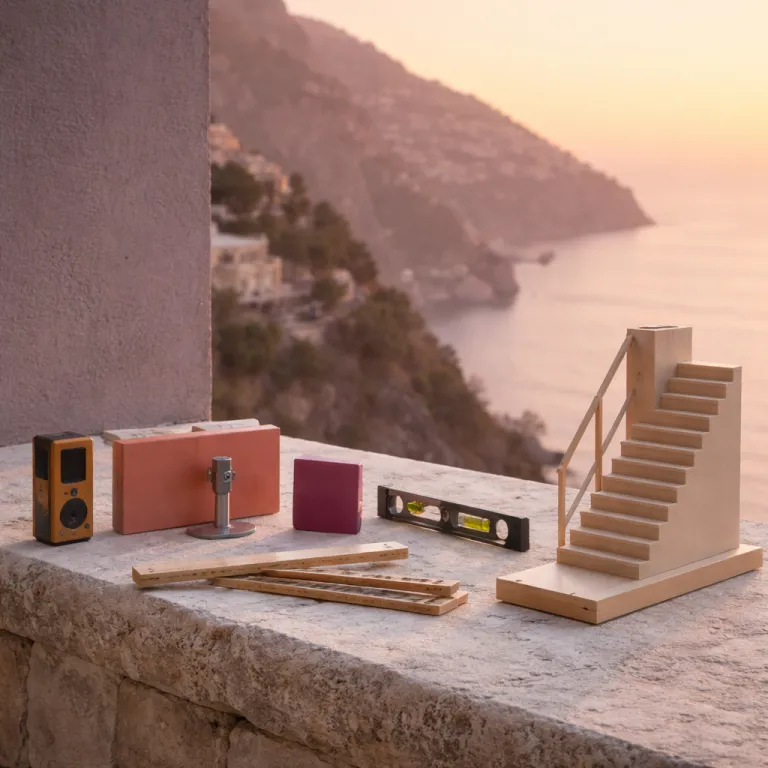
Why Amalfi Coast hotel accessibility starts with the staircase problem
Every luxury hotel on the Amalfi Coast is secretly a staircase strategy. On this vertical shoreline, where a typical cliffside property can drop 100 to 300 stairs from reception to the sea, Amalfi Coast hotel accessibility is less about glossy ramps in the lobby and more about how intelligently a hotel has tamed its height. Families, wheelchair users and older travelers feel this immediately, while others only understand it when they are carrying a sleeping child and a stroller up from the swimming pool at midnight.
The coastline from Sorrento to the town of Amalfi was never designed for elevators; it was carved for donkeys, fishermen and monks, so the modern idea of an accessible hotel is a retrofit layered onto medieval stone. Lifts, or ascensori, arrived late and often stop one or two terraces short of the beach, which means that even a wheelchair-accessible property on the coast can still hide 40 unforgiving steps between the last elevator door and the sea. When you read accessibility descriptions on glossy booking engines, you rarely see the real number of stairs, the gradient of the paths or how far the rooms sit from the center of each town.
This is why staircase design has become the hidden hospitality discipline of Campania, separating the best accessible hotels from the merely photogenic. On a coast where the main Amalfitana road is the only thread connecting towns, a hotel that solves vertical movement well can turn a challenging landscape into a graceful stay for multi-generational families. A property that ignores the problem leaves wheelchair users, grandparents and parents with young children stranded on terraces, watching the sea views they paid for but cannot comfortably reach in real time.
In Sorrento, where the cliffs are broad and the city center is flatter, some hotels manage accessibility with long internal corridors instead of endless external stairs. These Sorrento properties often sit closer to the main square and shops and restaurants, so wheelchair-friendly design can focus on ramps, wider doors and adapted bathrooms rather than heroic vertical engineering. By contrast, in Positano and the town of Amalfi, the geography forces many hotels to stack rooms above the sea like a stone wedding cake, and Amalfi Coast hotel accessibility becomes a question of how many lifts, how many landings and how many steps remain between them.
Ravello, perched 350 meters above the sea, offers a different version of the same challenge, because its hotels cluster near the historic center rather than the shoreline. Here, the best accessible hotels use the town’s relatively level streets to create wheelchair-friendly access to landmarks like Villa Rufolo, whose well-preserved gardens and terraces can be navigated with assistance. Yet even in Ravello, where the town’s coastal drama is more about views than beach clubs, you still need to ask how far your rooms are from the main square and whether any hidden stairs sit between reception and the breakfast terrace.
Across Europe, few coastal regions combine such extreme beauty with such complex accessibility as the Amalfi Coast. Publicly available listings on major review platforms show more than twenty hotels that actively market themselves as accessible, but the lived experience varies wildly depending on whether the property has invested in lifts, ramps and thoughtful circulation or simply widened a doorway and called it a day. Amalfi Coast hotel accessibility, in other words, is not a checkbox; it is a design philosophy that either respects the realities of this coast or pretends that gravity does not exist.
Clifftop engineering and real life: how top properties solve or fail the test
On this coastline, the most successful luxury properties treat vertical movement as seriously as they treat the wine list. Il San Pietro di Positano is a textbook example, with internal lifts that glide guests from cliff-top lobby to sea-level deck, turning what could be 250 stairs into a smooth, almost theatrical descent. For families and wheelchair users who can transfer into a lift but not manage long flights of stairs, this kind of engineering transforms Amalfi Coast hotel accessibility from marketing promise into daily comfort.
Borgo Santandrea, near the town of Amalfi, takes a similarly layered approach, stacking terraces, gardens and a swimming pool along the cliff with elevators linking each level. The result is that guests can move from rooms to the sea without feeling trapped by the coastal wheelchair reality that defines so many older properties, even if a few short stair segments remain. When you visit Amalfi and stay in a hotel like this, you see how a clear circulation plan, generous landings and well-placed lifts can make a dramatic site feel both luxurious and accessible.
Not every hotel in Amalfi has solved the puzzle so elegantly, and this is where honest evaluation matters. Some historic properties in Positano still advertise beach access, but the route involves 150 narrow steps that are brutal for grandparents, impossible for wheelchair users and exhausting for parents carrying toddlers. In these places, the sea views from the rooms are undeniably beautiful, yet the daily climb between the center and the shoreline quietly erodes the sense of ease that defines the best luxury stays.
For a premium family, the difference between a thoughtful accessible hotel and a merely compliant one shows up in the smallest moments. Can a grandparent roll a wheelchair from the lobby to breakfast without help, or does a staff member need to carry the chair down three separate staircases every time? Can a parent push a stroller from the city center back to the hotel after dinner in the main square, or does the route involve steep alleys and unlit steps that feel risky at night? These questions matter more than whether the hotel has marble bathrooms or a Michelin-starred restaurant.
Specialist operators such as Rome and Italy Accessible have emerged precisely because the gap between advertised accessibility and real life is so wide on this coast. Their équipe uses accessibility checklists, site inspections and user feedback to verify which accessible hotels genuinely work for wheelchair users and which ones only work on paper. When they recommend a wheelchair-accessible hotel in Amalfi or Sorrento, they are looking at the full journey from arrival on the Amalfitana road to the last step before the sea, not just the width of the bedroom door.
One example that often surfaces in accessibility conversations is a fully step-free seaside resort sometimes referred to in guides as “Sunrise Accessible Resort.” This label is used here as a clearly hypothetical case study rather than a verified brand name, illustrating a property designed from the ground up with barrier-free circulation and a private beach that can be reached without punishing stairs. While such a resort does not sit in the medieval center of any of the Amalfi towns, its layout shows what happens when universal design is baked into the concept rather than bolted on later. For travelers who prioritise Amalfi Coast hotel accessibility over being in the tightest historic center, this kind of resort can offer a calmer, more predictable base for exploring Campania.
Within the town of Amalfi itself, properties like Hotel Villa Felice illustrate another strategy, positioning the hotel slightly above the sea with shuttle access to the center. This reduces the number of stairs guests face daily while still delivering wide sea views and proximity to shops and restaurants along the waterfront. As one accessibility consultant summarised after a recent inspection, “The elevation here works in your favour: you trade a few minutes in the shuttle for a huge reduction in daily steps.” For many families, that balance between elevation, views and manageable access proves more valuable than being directly on the crowded promenade.
Families, wheelchairs and strollers: navigating towns, terraces and expectations
For premium families, the Amalfi Coast is both a dream and a logistics exam. The same vertical streets that create cinematic views over the sea also turn every gelato run into a mini hike, especially when you are pushing a stroller or guiding a wheelchair through a crowd. Understanding Amalfi Coast hotel accessibility means looking beyond the hotel gate and reading how each town’s topography will shape your days.
Positano is the most obvious example, a cascade of pastel houses where almost every route between the upper road and the beach involves stairs, ramps and steep lanes. Even when you book an accessible hotel here, you may find that the path from the city center to your rooms includes sloping streets that are technically wheelchair-friendly but physically demanding, particularly in the heat. Families who imagine a flat promenade often arrive surprised, because the postcard never shows the steps between the main square, the shops and restaurants and the sand.
The town of Amalfi is gentler, with a relatively flat seafront and a compact center that works better for wheelchair users and older travelers. Here, a wheelchair-accessible hotel near the waterfront allows you to roll from lobby to cafés, the cathedral steps and the marina without confronting endless stairs, though some alleys behind the main square still climb sharply. When you visit Amalfi with children or grandparents, staying close to the center reduces the daily distance you need to push a stroller or chair, which matters more than shaving a few euros off the room rate.
Ravello trades beach access for altitude, sitting high above the coast with sweeping views and a calmer rhythm. The streets around Villa Rufolo and the well-preserved historic core are more manageable for wheelchairs than Positano’s vertical maze, but you still need to check how many steps separate your hotel from the nearest taxi drop-off. For some families, a few days in Ravello paired with day trips down to the sea offers a more sustainable way to enjoy the Amalfi Coast without wrestling with stairs every hour.
Sorrento, technically just outside the classic Amalfi Coast but firmly part of the same travel circuit, is often the smartest base for families focused on accessibility. The town’s plateau layout, wider pavements and clearer grid make it easier to move between hotels, the city center, the marina and the train station with a wheelchair or stroller. From here, you can reach Capri, Amalfi and Positano by boat while returning each night to a place where pushing a chair along the coast feels less like a workout and more like a stroll.
Expectations matter as much as engineering, and this is where honest content beats glossy brochures. Our own editorial stance, reflected in pieces such as the sandy beach delusion, is that cliffside hotels can deliver extraordinary experiences when they are transparent about the stairs and lifts involved. When you read accessible descriptions of a hotel, look for specific language about elevators, gradients and distances, not vague promises of being wheelchair-friendly or close to the sea.
Families also need to think about how they will actually use the property’s amenities over time. A swimming pool that looks spectacular in photos may sit five terraces below your rooms, which is fine for energetic teenagers but less ideal for a grandparent who cannot manage repeated stair climbs. As one parent who travelled with a wheelchair-using child put it in a public review, “The view was magical, but the 120 steps between our room and the pool meant we only went once a day.” Amalfi Coast hotel accessibility, in this sense, is about aligning the physical layout of the hotel and the town with the real rhythms of your family, from nap schedules to late evening walks for gelato.
How to interrogate accessibility before you book: questions that change your stay
Most accessibility disappointments on the Amalfi Coast begin at the booking stage, when guests ask the wrong questions or accept vague answers. A hotel that says it is wheelchair-friendly may mean that the lobby has a ramp, not that a wheelchair user can reach the sea, the swimming pool or the breakfast terrace without help. To navigate Amalfi Coast hotel accessibility intelligently, you need to interrogate the vertical reality of each property before you commit.
Start by asking for numbers, not adjectives, because numbers reveal the truth of the coastal wheelchair challenge. How many stairs are there between the street entrance and reception, between reception and the rooms, and between the rooms and the sea or pool? How many lifts exist, where do they start and end, and are there any intermediate landings that still require climbing steps with a stroller or wheelchair?
Next, map the hotel against the town, because an accessible hotel isolated from the center can still create daily friction. Ask how far it is in metres from the hotel door to the main square, the city center and the nearest cluster of shops and restaurants, and whether the route involves steep slopes or stairs. In places like Positano and the Amalfi towns, a hotel that sits slightly higher but offers a shuttle to the center can be more practical for wheelchair users than a property wedged deep in the old streets with no vehicle access.
Then, drill into room-level details, because accessible rooms on the Amalfi Coast vary widely in quality. Confirm the door widths, the presence of roll-in showers, grab bars and space to turn a wheelchair beside the bed, and ask whether these features exist in multiple rooms or only in a single showcase suite. When you read accessible descriptions online, cross-check them with recent guest photos and, if possible, with specialist services such as Rome and Italy Accessible, whose inspections focus on real-world usability rather than marketing language.
Transport is the final piece of the puzzle, especially if you plan to combine several towns along the coast or add Capri to your itinerary. Boat landings in Capri, Amalfi and Positano each have different levels of accessibility, and some require negotiating steps between pier and promenade, which can be challenging for wheelchair users without assistance. When planning a Capri–Amalfi day trip, ask both your hotel and the boat operator to explain exactly how boarding and disembarkation work for your specific mobility needs.
Behind all these questions lies a simple principle: you are not being difficult, you are designing a stay that respects your body and your family. Service providers on the ground understand this, which is why local experts now state clearly that “Are there wheelchair-accessible hotels in Amalfi? Yes, several hotels offer wheelchair-accessible facilities.” and “Do accessible hotels provide adapted bathrooms? Many accessible hotels feature roll-in showers and grab bars.” and “Is the Amalfi Coast suitable for travelers with disabilities? While some areas are challenging, accessible accommodations are available.” When you approach Amalfi Coast hotel accessibility with this level of precision, you turn a potentially stressful trip into one of the best, most memorable places your family will ever stay.
For travelers who combine work and leisure, it can also be worth looking at how larger conference-style properties in Italy handle circulation and access. Venues such as the Florentia conference hotel in Florence, profiled in our guide to elegant stays and events, show how modern builds integrate lifts, ramps and level access from the outset. While the Amalfi Coast’s historic fabric makes such seamless design harder, the same principles can guide your questions and help you read accessibility claims with a more critical, expert eye.
Key figures on Amalfi Coast hotel accessibility
- Recent assessments of public review data indicate that around 22 hotels on the Amalfi Coast actively market themselves as accessible properties, a small fraction of the total inventory but a meaningful base for wheelchair users seeking verified options (based on manual sampling of Tripadvisor listings and filters for accessibility features, accessed 2024).
- The average accessibility rating of these accessible hotels stands at approximately 4.5 out of 5, suggesting that properties which invest in lifts, ramps and adapted rooms tend to deliver higher overall guest satisfaction than the regional average (calculated from aggregated Tripadvisor review scores for hotels tagged with accessibility amenities, accessed 2024).
- Local accessibility specialists report that a typical cliffside hotel may involve 100 to 300 stairs between entrance and sea level, which makes the presence and placement of elevators the single most important factor in real-world Amalfi Coast hotel accessibility (compiled from site inspections and hotel association briefings shared with accessibility consultants; see also summaries published by regional tourism and disability advocacy groups).
- Regional tourism and accessibility organizations note a clear rise in demand for inclusive travel, with more hotels in Campania upgrading rooms, bathrooms and circulation routes to attract premium families and travelers with reduced mobility (summaries of local tourism board and accessibility organization reports, 2022–2024, available via official Campania tourism portals and disability travel resources).
Sources and further reading
- Tripadvisor – aggregated accessibility ratings and guest reviews for Amalfi Coast hotels (search for “Amalfi Coast accessible hotels” and filter by accessibility features).
- Local tourism boards of Campania and the Amalfi Coast – official guidance on accessible routes, public transport and services for travelers with reduced mobility.
- Rome and Italy Accessible – specialist inspections, consulting and practical advice on accessible travel throughout Italy, including the Amalfi Coast and Sorrento.