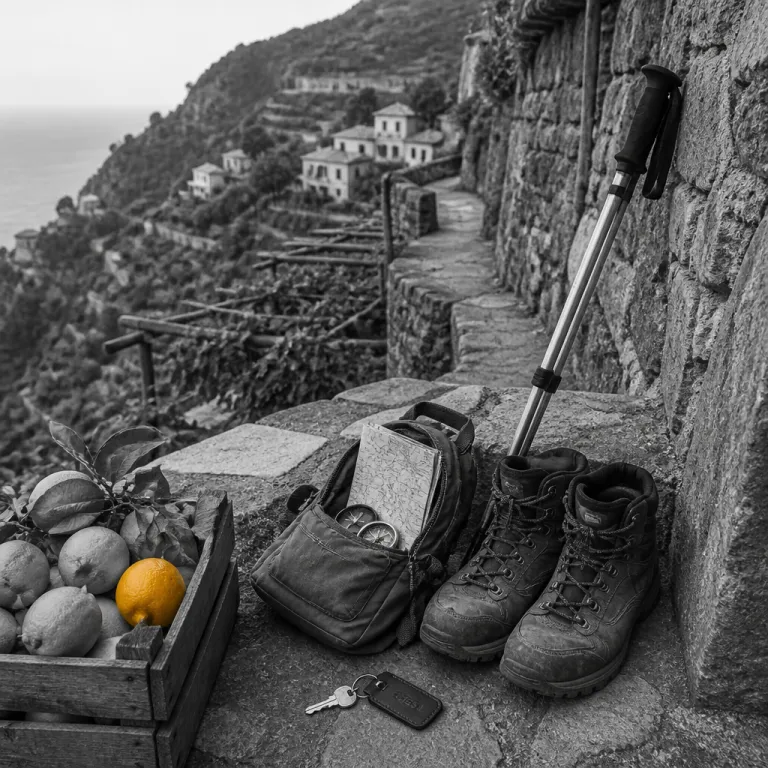
The lemon trail Ravello walk that starts where luxury usually ends
Most five-star concierges on the Amalfi Coast will steer you toward the famous Path of the Gods, but the quieter lemon trail Ravello walk that begins in Minori is the pilgrimage that serious walkers remember. This old agricultural path between the coast and Ravello climbs through working lemon groves rather than past infinity pools, and it reshapes how you think about luxury on the Amalfi Coast because the reward is earned step by step. If you care as much about the scent of sfusato lemon trees as the thread count on your sheets, this is your hike.
The route locals call the sentiero dei limoni links Minori and Maiori along a stepped path of about 4.5 km, then continues as a steeper trail toward Ravello for a total Minori–Ravello walk of roughly 6 km. Official trail boards from the Comune di Minori and GPS tracks published by local hiking groups confirm that this path of lemons was historically a mule route, built so farmers could carry crates of sfusato lemons down to the port of Minori and up again to the village torre houses that watched the sea for pirates. Today you walk the same path lemons once travelled, passing stone cisterns, terraced walls and the occasional church bell from Santa Maria drifting up from the coast below.
For luxury travelers, the appeal is twofold: the lemon groves route gives you cinematic views without the crowds, and it connects directly into Ravello’s refined world of palazzi, gardens and concert terraces. You start at sea level in Minori, where the Minori–Maiori coastline feels human scaled compared with Amalfi–Positano glamour, then finish in Piazza Duomo in Ravello beside the church of Santa Maria del Gradillo and the cathedral. That contrast between working village and cultivated hilltop is what makes this itinerary such a powerful way to frame your stay on the Amalfi Coast.
From Minori to Maiori: walking the sentiero dei limoni like a local
The first section of the lemon trail Ravello walk follows the sentiero dei limoni between Minori and Maiori, a gently undulating path that lets you warm up before the serious climb. You leave Minori’s small marina and the church of Santa Trofimena, then pick up the stone steps that thread between lemon groves, passing under pergolas heavy with lemons in late spring and early summer when the air becomes a scented tunnel. This is where the walk feels most intimate, because you see how sfusato lemon trees are tied, shaded and irrigated, not curated for Instagram.
Expect around ninety minutes for this Minori–Maiori stretch if you stop for photos and to look back at the coast, where the views open toward Amalfi and the more distant outline of Amalfi–Positano on a clear day. The path of lemons here is moderate, with some steep staircases but frequent flat sections where local hikers pause and tour guides share how the dei limoni trade once underpinned every family in these villages. Official information from the Comune di Minori and the Maiori tourism office notes that the trail length is about 4.5 km with roughly 250–300 m of elevation gain and a duration of around one and a half hours for this section, which matches what you will feel in your legs.
Halfway along, the hamlet of Torre offers a natural break; this village Torre cluster of houses clings to the slope, with a tiny church and a bar where you can refill your water bottle before continuing toward Minori–Maiori viewpoints. As you descend toward Maiori, the path passes above the beach of Maria a Mare, where the church of Santa Maria a Mare crowns the town and reminds you that every settlement on this coast or Amalfi valley is anchored by a church. This is also the moment to think ahead to your day’s itinerary in Ravello and how you will time the rest of your hike and your return travel to your hotel.
Climbing to Ravello: scent corridors, staircases and serious views
Leaving Maiori or looping back from mare Maiori toward Minori, you pick up the steeper section of the lemon trail Ravello walk that climbs toward Ravello itself. Here the path turns into a sustained staircase, and the hiking becomes more demanding as you gain around 400 m in elevation over stone steps that feel endless but reward you with expanding views of the Amalfi Coast. This is where you understand why guides advise: “Wear sturdy footwear”, “Carry water”, “Start early to avoid heat”.
Between Minori and Ravello the trail threads through dense lemon groves, and in late spring the scent is almost architectural, forming invisible corridors of perfume that follow the line of the path. You walk under wooden pergolas where sfusato lemons hang above your head, and you pass small stone shelters where farmers once rested their mules during the day when the sun was highest. The hike is suitable for beginners with reasonable fitness, and local information confirms: “Yes, but some sections are steep”, “Yes, several spots to rest and enjoy views”, “Yes, but best in spring and autumn.”
As you approach Ravello, the path intersects with lanes leading toward the collegiata Santa Maria a Gradillo and the main piazza, and suddenly the agricultural world gives way to polished stone and quiet hotel entrances. This is also where the vertical nature of the coast becomes obvious, and it is worth reading about the vertical coastline problem and how hotels live and die by their staircases before you book. The contrast between the raw stone steps of the trail and the carefully engineered staircases of luxury properties will shape how you evaluate every hotel you visit on the Amalfi Coast.
How luxury travelers should plan the lemon trail Ravello walk
For a three to four hour lemon trail Ravello walk that still leaves energy for a refined evening, start in Minori by 08:00, when the light is soft and the path is quiet. Take a ferry from any major Amalfi Coast town to Minori, or arrive by private boat transfer if you are staying in Amalfi–Positano or Praiano and want a smoother travel experience. From the harbour, follow signs for the sentiero dei limoni, then continue the hike up toward Ravello, aiming to reach Piazza Duomo by early afternoon.
Once in Ravello, you can check into a luxury property such as Palazzo Avino or Caruso, where concierges will happily arrange a sunset dinner or a terrace aperitivo that feels like a reward for every step of the trail. Many high-end hotels in Ravello and Amalfi now work with local tour guides and luggage transfer services, so you can send your bags ahead while you walk lemon paths with only a daypack and water. This point-to-point style of hiking pairs well with slow travel itineraries that link inland wine country, such as the Tramonti area described in guides to Amalfi Coast wine villages where families still press their own, with coastal stays.
To frame a full day, visit Villa Rufolo’s gardens for their elevated views, then attend an evening concert on the Belvedere terrace if your dates align, before dining at a fine restaurant back in town. Some travelers choose to descend to Minori or Amalfi by bus or taxi after dinner, while others prefer to stay overnight in Ravello and return to the coast the next day. Either way, the combination of a morning hike through lemon groves, an afternoon among cloistered gardens and an evening of music or gastronomy turns a simple trail into a defining chapter of your Amalfi Coast itinerary.
Comparing the lemon trail with the Path of the Gods and coastal life
Many luxury travelers arrive on the Amalfi Coast with the Path of the Gods at the top of their hiking list, but the lemon trail Ravello walk offers a different kind of reward. The Path of the Gods runs high above Amalfi–Positano with huge open views and little shade, while the path of lemons between Minori and Ravello stays closer to the agricultural terraces and offers more frequent contact with local life. If you value shade, scent and cultural context as much as panoramic views, this hike will probably feel richer.
On the Path of the Gods you share the trail with large groups and hear multiple languages, whereas on the lemon groves route you are more likely to meet local hikers and farmers carrying tools or crates of lemons. The atmosphere is quieter, and the famous views arrive in layers as you climb, rather than in one continuous balcony over the sea. For travelers who have already explored Amalfi’s paper mills and the historic industry described in analyses of how the town’s paper mills still shape life beyond the cathedral steps, the lemon trail adds another dimension to understanding how work, water and stone built this coast.
There is also a culinary angle: starting in Minori lets you stop at Pasticceria Sal De Riso on the seafront, where Sal De Riso’s pasticceria Sal Riso is famous for its delizia al limone, a dome of sponge and lemon cream that tastes like the trail in dessert form. Enjoy one before or after your walk lemon route, and you will never taste sfusato lemon in the same way again. Pair that with a glass of local wine from Tramonti in the evening, and your day on the path lemons between Minori–Maiori and Ravello becomes a complete Amalfi Coast experience that ties landscape, labour and luxury together.
Practical tips, safety and hotel strategies for the lemon trail
The lemon trail Ravello walk is accessible year round, but spring and autumn offer the best balance of temperature, light and crowd levels. Start early in the day to avoid the strongest sun, carry at least one and a half litres of water per person, and wear proper hiking shoes rather than beach sandals because some sections of the trail are steep and uneven. Local guidance is clear that the hike is suitable for beginners, but you should still respect the elevation gain and the cumulative effect of thousands of stone steps.
Guided tours are available through local tour companies based in Minori, Maiori and Ravello, and they can add context about the history of the dei limoni trade, the role of the collegiata Santa Maria churches in village life and the way these paths once connected every terrace to the port. Many luxury hotels on the Amalfi Coast now collaborate with these guides, offering private lemon groves walks, transfers to the trailhead and even picnic baskets featuring sfusato lemon salads and local cheeses. When you evaluate properties on a site like stay-in-amalfi-coast.com, look for hotels that understand hiking as part of the guest experience rather than an afterthought.
Sustainable tourism is a growing focus here, with increased popularity among tourists balanced by efforts to protect the path, the terraces and the farmers who maintain them. Staying on marked routes, not picking lemons from private groves and supporting local businesses in Minori, Maiori and Ravello are simple ways to ensure your walk lemon experience has a positive impact. In return, the Amalfi Coast will give you something most itineraries miss: a direct, physical connection between the sea, the stone and the sfusato lemon trees that still define this landscape.
FAQ about the lemon trail Ravello walk
Is the lemon trail Ravello walk suitable for beginners?
The lemon trail Ravello walk is suitable for beginners with reasonable fitness, because the path is well marked and the surface is mostly stone steps and paved lanes. Some sections are steep, especially between Minori and Ravello, so you should be comfortable with sustained stair climbing. Taking regular breaks and starting early in the day will make the hike feel manageable for most travelers.
How long does the hike between Minori, Maiori and Ravello take?
The full hike that links Minori, the sentiero dei limoni to Maiori and then climbs to Ravello typically takes around three to four hours at a relaxed pace. The Minori to Maiori section of the path of lemons usually requires about ninety minutes, while the ascent from Minori to Ravello can take another ninety minutes depending on your speed. Allow extra time for photos, rest stops and visits to churches or viewpoints along the way.
When is the best time of year to walk the path of lemons?
The path of lemons and the climb to Ravello can be walked year round, but spring and autumn offer the most comfortable conditions. In spring, lemon trees are in bloom and the scent in the groves is especially intense, while temperatures are mild enough for a late morning start. Summer brings stronger sun and more heat, so early departures are essential, and winter can be cooler and occasionally wet but still pleasant on clear days.
Are there rest stops or services along the trail?
There are several informal rest spots along the lemon trail Ravello walk, including benches, low walls and shaded terraces where you can pause. In the hamlet of Torre and in both Minori and Maiori you will find cafés or bars where you can buy water, coffee or a snack before or after the main hiking sections. Public fountains exist in some areas, but you should not rely on them exclusively and always carry your own water.
Can I combine the lemon trail with a luxury hotel stay?
Combining the lemon trail Ravello walk with a luxury hotel stay is one of the most rewarding ways to experience the Amalfi Coast. Many high-end properties in Ravello and Amalfi can arrange transfers to Minori, provide packed lunches for the hike and organise luggage transport so you can walk point to point without carrying heavy bags. Planning your itinerary so that you arrive in Ravello by mid afternoon allows time to check in, relax by the pool or terrace and then enjoy a refined dinner or concert after your day on the trail.